Understanding SIP Trunking: Modern Digital Lines for Your Business
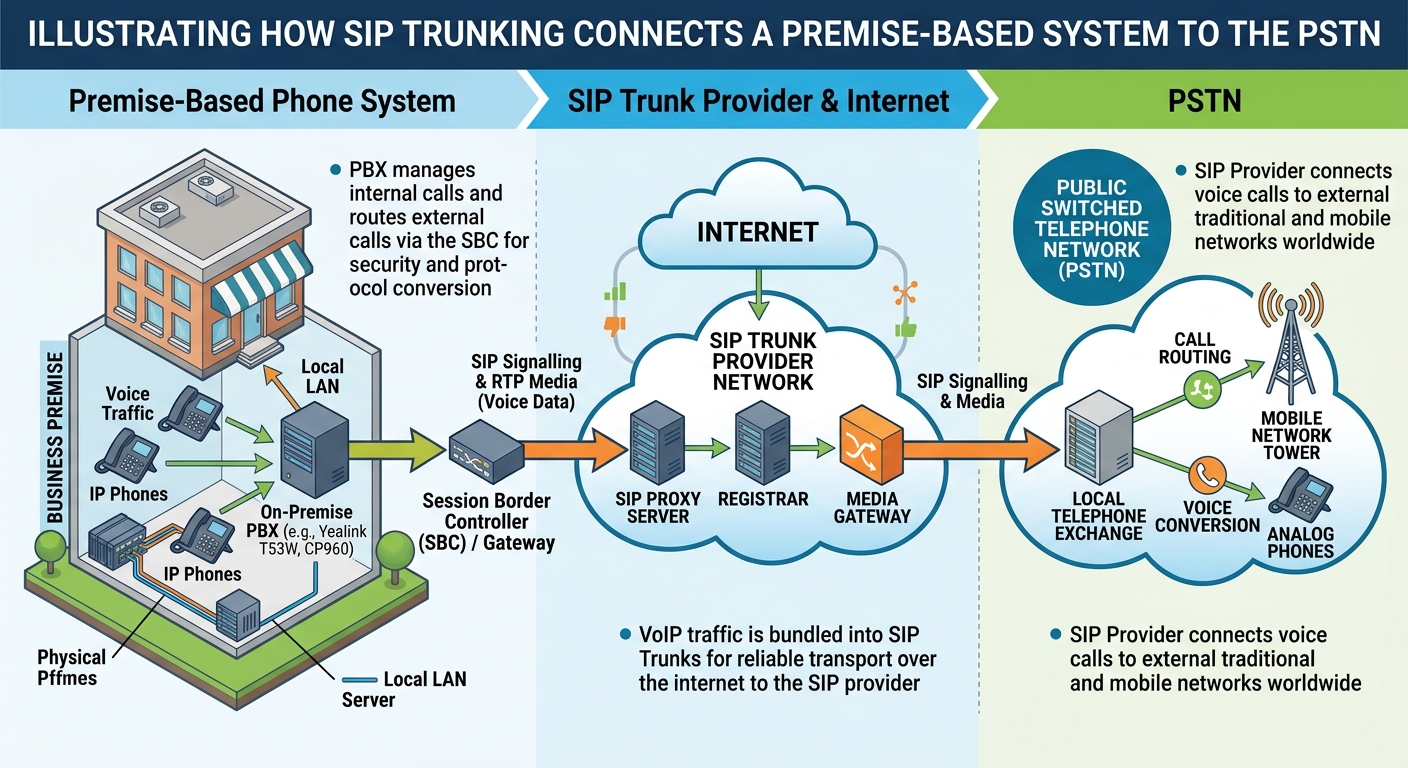
What is SIP?
Session Initiation Protocol (SIP) is the technology that connects and manages communication over the internet. Whenever you start, modify, or end a digital voice call or video conference, SIP works behind the scenes to establish and route that connection seamlessly.
What is SIP Trunking?
Think of SIP Trunking as the modern, internet-based replacement for traditional phone lines. Instead of relying on physical copper wires running into your building, SIP Trunking delivers your phone service directly over your existing internet connection. It acts as a digital bridge, connecting your business’s phone system to the public telephone network.
Why Businesses Use SIP Trunking Today
SIP Trunking has become the preferred digital telephone line service for premise-based business phone systems. Here are the most common practical applications in today’s business environment:
Modernizing On-Premise PBX Systems: If your office has an existing phone system (whether a modern IP-PBX or a legacy hardware setup), SIP Trunking allows you to upgrade to cloud-based call delivery without replacing your current physical hardware.
Cost Reduction: It eliminates expensive traditional analog lines and T1/PRI circuits. Businesses only pay for the capacity they actually need, reducing monthly line-rental fees and long-distance costs.
Flexible and Remote Work Setup: Because call routing runs over the internet, SIP Trunking easily supports remote employees, mobile extensions, and multi-office setups under a single unified phone plan.
On-Demand Scalability: Adding new phone lines or expanding call capacity for busy seasons requires a quick software update rather than waiting days or weeks for a technician to install physical lines.
Built-in Business Continuity: If your main office loses power or internet, SIP Trunking can automatically reroute incoming calls to mobile phones or alternate locations so you never miss a customer call.

Was this article helpful?
That’s Great!
Thank you for your feedback
Sorry! We couldn't be helpful
Thank you for your feedback
Feedback sent
We appreciate your effort and will try to fix the article